
Customer Stickiness vs Customer Loyalty: What Really Keeps Customers Coming Back
AI-Powered Key Takeaways


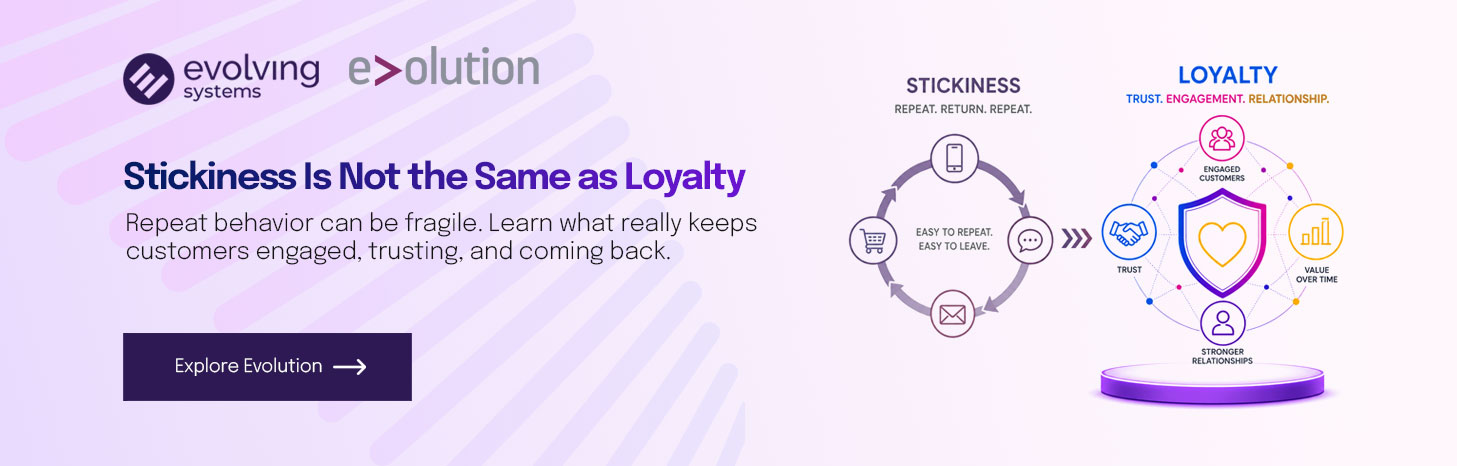
Why Some Brands cultivate lasting customer relationships While Others Get Lost in Price Wars
Most brands dream of having loyal customers, but many confuse repeat purchase with loyalty. The two are very different.
Stickiness brings a customer back because the brand currently offers the best value.
Loyalty brings a customer back because the brand has earned deep trust by consistently delivering what it promises.
A sticky customer will move the moment another brand offers better value.
A loyal customer will stay, even when competitors tempt them. Loyalty creates an emotional and psychological bond that is not easily shaken.
This raises an important question:
What is it that one brand does so well that it creates loyalty, while another ends up fighting price wars?
What allows one brand to communicate with customers effortlessly while others struggle despite large budgets and teams?
The Answer: Customer Experience Obsession
Jeff Bezos once famously said:
“There is one thing about Amazon.com: It is obsessive attention to customer experience.”
And in the same interview, he added:
“Investors should be investing in a company that is obsessing over customer experience.”
That’s not strategy.
That’s a philosophy. A mindset. A culture.
Steve Jobs echoed the same principle when he said:
“You have got to start with the customer experience and work backward to the technology.”
Across industries, across decades, the message has been identical:
Customer experience is not part of the business; it is the business.
A Real-Life Example: Blue Bird Taxis in Indonesia
I remember using Blue Bird (Blue/Silver) taxis in Indonesia and being genuinely surprised by the respect, professionalism, and overall customer experience.
At first, I assumed all taxis would be similar.
They weren’t.
Blue Bird had clearly ingrained customer service into its DNA, driven from top-down, and reflected in its drivers’ behaviour.
It was not random.
It was culture.
And as a customer, I did not mind paying a little extra for that reliability, respect, and comfort.
That is loyalty, not stickiness.
Why Loyalty Stands Out
Many factors influence loyalty, but two stand above the rest:
- Extraordinary Customer Experience
- Exceptional Customer Service
Most brands design journeys that work for the majority of their customers. They proudly say:
“90% of our customers are satisfied.”
But the real question is:
Why are the remaining 10% unhappy?
This is important because customer experience creates something deeper than satisfaction, it creates trust. And trust is the foundation on which true loyalty is built.
Trust is one of the strongest pillars of loyalty, and it is built not during good times, but during difficult ones. Customers remember how a brand treats them when something goes wrong. When a brand says, “We are here for you. We will make it right,” and genuinely follows through, it creates a sense of safety and respect.
This trust cannot be bought with discounts or marketing campaigns. It comes from empathy, consistency, and the courage to correct mistakes when customers need support the most.
Jeff Bezos explained the risk bluntly:
“If you make customers unhappy in the physical world, they might tell six friends.
If you make them unhappy on the Internet, they can each tell 6,000.”
This is the precise moment where stickiness and loyalty diverge.
A sticky customer complains and silently leaves.
A loyal customer complains and wants to stay, if the brand listens and acts.
Loyalty grows when a brand shows it cares about every customer, not just the majority.
Brands Have a Personality — And They Must Be Willing to Say “We Were Wrong”
Just as individuals introspect, brands must do the same.
And one of the hardest sentences for a brand to say is:
“We were wrong.”
But some brands dare to do it.
Domino’s Pizza ran their bold “We’re Sorry for Sucking” campaign.
They publicly shared harsh customer feedback:
- “The crust tastes like cardboard.”
- “The sauce tastes like ketchup.”
- “Domino’s is a last resort.”
Instead of being defensive, they listened. They reinvented their product.
Customers rewarded them:
Sales went up, stock prices soared, and the brand regained respect.
Honesty built loyalty faster than any discount ever could.
What Loyal Brands Have in Common
They listen — truly listen — to their customers.
They don’t hide behind:
- metrics
- dashboards
- NPS numbers
- “majority satisfaction”
They ask:
“Who is unhappy, and why?”
“What can we fix today?”
“What can we learn?”
As Bezos warned:
“If there are a bunch of customers complaining, and your metrics show they shouldn’t be complaining, you should doubt the metrics, not the customers.”
This is the “secret” that must be part of a brand’s DNA.
The difference between a commodity brand and a beloved brand is not just marketing.
It is customer empathy and consistent improvement.
If It’s So Simple, Why Do Most Brands Fail?
Because listening is simple.
But acting on what you hear is extremely hard.
Brands struggle because:
- They find it difficult to justify the cost of fixing deeper issues.
- They lose focus and drift away from the customer.
- They can’t differentiate real concerns from noise.
- They rely too heavily on metrics instead of raw customer voice.
- They optimize for short-term revenue, not long-term trust.
Yes, some complaints may be fake or exaggerated.
But even one genuine unhappy customer means the brand failed to deliver the promise it made.
And one disappointed customer is enough to influence thousands.
The Final Thought
Customer stickiness keeps the lights on.
Customer loyalty builds empires.
And loyalty does not come from marketing, discounts, or great features.
It comes from:
- listening with humility
- improving with honesty
- caring with intention
- delivering with consistency
Brands that master this become unshakeable.
Brands that ignore it become forgettable.

Sumit Sureka
Solution Consultant at Evolving Systems
Author’s Profile
Sumit Sureka is a Solution Consultant and Product Manager at Evolving Systems with over 18 years of experience driving innovation across telecom and Customer Value Management (CVM) platforms. He specializes in enabling AI-driven CVM, leveraging predictive intelligence, real-time insights, and automation to help operators personalize customer engagement, optimize loyalty programs, and improve customer lifetime value at scale. Sumit has led end-to-end product development initiatives, building solutions that connect subscribers, merchants, and digital ecosystems while addressing complex operational and performance challenges. With hands-on experience supporting telecom operators across South Asia, the Middle East, North America, and CALA, he brings a strong global perspective on applying AI to transform customer engagement strategies. He holds an MBA from SPJIMR, Mumbai, with a focus on IT, Strategy, and Marketing, further strengthening his ability to bridge technology innovation with measurable business outcomes.