
Where Subscriber Experience Begins: Personalizing SIM Activation Across Asia and Africa
AI-Powered Key Takeaways


Across Asia and Africa, telecom companies are working hard to improve the customer experience. Mobile apps are easier to navigate, digital sign-ups are smoother, and the products offered are more tailored to each person’s needs.
But one of the first experiences customers have with a mobile operator, activating their SIM card, often still feels outdated and clunky.
SIM activation is the moment when someone goes from wanting to use a mobile service to actually being able to do so. It’s also their first real taste of what the company is like. A fast, smooth activation that feels tailored to the customer can build trust right away. But if the process is slow, confusing, or limited—if there are delays, few choices, or lots of paperwork—people can get frustrated before they’ve even started using their new service.
For mobile companies dealing with millions of prepaid customers, lots of languages, wide dealer networks, and a mix of old and new network tech, SIM activation is more than just a technical step. It can make or break whether someone signs up, sticks around, or recommends the service to friends.
Dynamic SIM Allocation (DSA) lets mobile operators modernize the first interaction by enabling instant SIM activation and personalized onboarding from the start.
Why First-Use SIM Activation Matters
Customers increasingly expect immediate and intuitive experiences. Digital banking platforms, e-commerce services, streaming applications, and online marketplaces have raised expectations for speed and personalization.
Subscribers often do not separate the activation journey from the overall quality of the operator. Their perception of the brand can begin the moment they insert the SIM and attempt to connect.
A smooth activation experience can help operators:
- Convert new customers into active subscribers more quickly.
- Reduce early-stage frustration and abandonment.
- Guide users toward more relevant plans and services
- Establish stronger engagement from the first interaction.
- Improve the consistency of onboarding across channels.
A poor experience can create the opposite result. Even if network coverage and service quality are strong, activation friction can weaken the subscriber’s first impression.
Why Pre-Provisioned SIM Models Limit Personalization
Traditional SIM distribution models often assign subscriber identities, mobile numbers, product profiles, or geographic attributes before SIM cards enter the sales channel.
This approach may simplify some parts of distribution, but it limits flexibility once customer demand changes.
An operator may produce separate SIM packs for:
- Different prepaid tariffs
- Specific regions
- Particular sales channels
- Voice, data, or mobile broadband services
- Promotional campaigns
- Separate brands or customer segments
This structure can restrict subscriber choice at activation. The customer often receives a SIM that already carries a predetermined service profile rather than selecting the option that best meets their needs.
For operators across Asia and Africa, where customer requirements can vary significantly by language, location, device type, affordability, and channel, this limitation becomes increasingly important.
How Dynamic SIM Allocation Changes the Model
Dynamic SIM Allocation separates physical SIM inventory from the final subscriber identity and service configuration.
Instead of permanently assigning numbers and products before distribution, operators can distribute a more flexible SIM and configure it when the subscriber activates it.
During first use, DSA can authenticate the SIM, initiate the activation journey, and allocate the required identifiers and service profile in real time.
This changes SIM activation from a fixed provisioning process into a responsive customer experience.
Personalization at the First SIM Insert
With DSA, operators can guide subscribers through an interactive activation journey using channels such as:
- USSD menus
- SIM Toolkit menus
- Mobile web browsers
- Mobile applications
- Digital self-service portals
- Assisted retail interfaces
Depending on the operator’s business rules and service design, subscribers can personalize several aspects of their service.
Language selection
Subscribers can choose a preferred language during activation. This is especially relevant in multilingual markets across Asia and Africa, where a single national or regional market may include several widely used languages.
Operators can improve accessibility without producing separate SIM packs for every language group.
Tariff and package selection
Subscribers can select prepaid, postpaid, voice, data, or mobile broadband packages based on their expected usage.
This helps operators move away from a one-size-fits-all activation model and create stronger alignment between subscriber needs and service selection.
Personalized number selection
Operators can allow subscribers to choose from available numbers, including standard, memorable, vanity, or premium numbers.
This improves customer choice and can create an additional revenue opportunity where operators monetize selected number ranges.
Relevant promotions
Operators can present offers based on location, activation channel, product type, device, or campaign eligibility.
A subscriber activating in one region may receive a different welcome offer from a customer activating the same SIM elsewhere.
Device-aware onboarding
The activation journey can reflect the device being used. A smartphone user may receive data-led bundles, while another type of device may receive a more suitable service configuration.
Practical DSA Applications in Asia and Africa
Prepaid subscriber onboarding: A prepaid customer purchasing a SIM through an independent dealer can select a language, tariff, and available number during activation. The operator can offer current products without replacing the SIM inventory already held by the dealer.
Tourist SIM activation: Operators can use flexible SIM stock to offer visitor-focused plans, international calling options, short-duration data bundles, and language preferences at activation.
This reduces the need to maintain separate tourist SIM packs in airports, hotels, transport hubs, and retail locations.
Localized offers: Operators can provide region-specific promotions without manufacturing new SIM cards for every campaign or location.
Digital-first acquisition: Subscribers purchasing through an online channel can complete activation through a mobile application or web-based journey while receiving the same personalization options available in physical retail channels.
From Price Competition to Experience-Based Differentiation
Many operators compete in markets where basic voice and data services are increasingly commoditized. Price reductions may attract short-term attention, but they can also place pressure on margins.
Personalized activation gives operators another way to compete.
By offering customers more control, faster onboarding, and more relevant service options, operators can differentiate through experience rather than relying only on price.
This can support:
- Stronger first impressions
- More relevant product selection
- Improved early engagement
- Lower first-cycle churn
- Better alignment between customer needs and tariff choice
- Greater potential for ongoing personalization
Make First Use Part of the Customer Experience Strategy
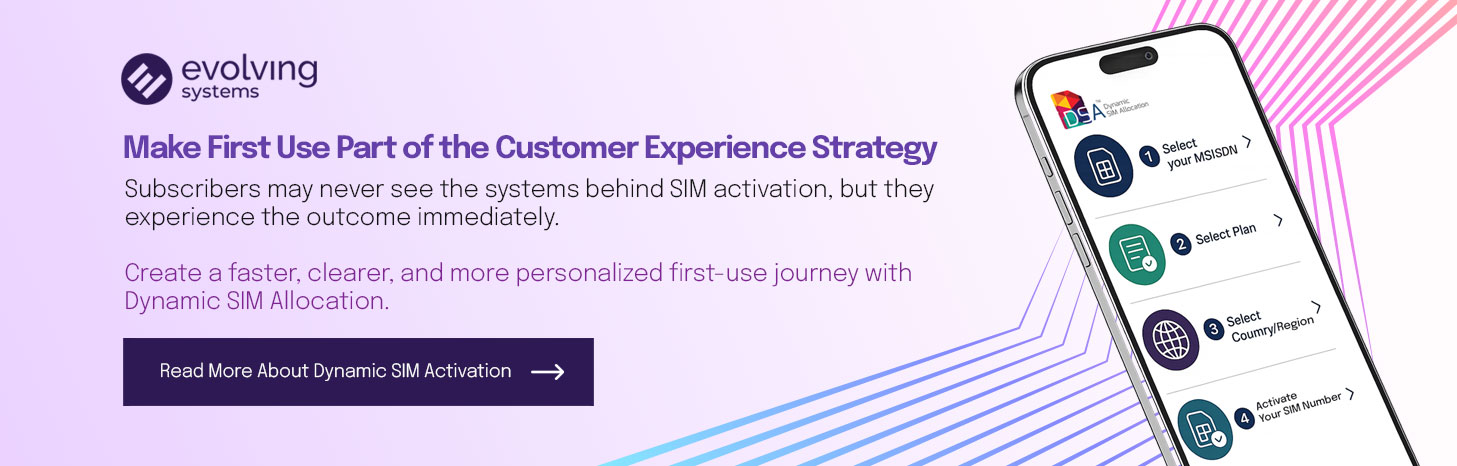
Subscribers may never see the systems behind SIM activation, but they experience the outcome immediately.
They notice whether activation is fast, whether the instructions are clear, whether the available options feel relevant, and whether they can begin using the service without unnecessary delays.
For operators across Asia and Africa, modernizing activation can strengthen customer experience from the first SIM insert.
Dynamic SIM Allocation helps turn first use into an opportunity to personalize the journey, engage the subscriber, and establish a stronger foundation for long-term value.
Stay tuned for Part 2 to explore how Dynamic SIM Allocation improves multi-channel activation, dealer performance, SIM inventory efficiency, and subscriber acquisition across Asia and Africa.